

Procedure
Laparoscopic Reversal of Tubal Sterilisation
Dr Michael Wynn-Williams offers laparoscopic reversal of tubal sterilisation for women considering pregnancy after prior tubal ligation — using precise, minimally invasive surgical techniques.
Laparoscopic Reversal of Tubal Sterilisation or Tubal Reanastomosis is a keyhole operation to rejoin separated or clipped uterine (Fallopian) tubes. Traditionally in New Zealand, the procedure has been performed through a bikini-line incision.
Dr Wynn-Williams performs laparoscopic tubal sterilisation reversal procedures under general anaesthetic. It is performed through small Laparoscopic (keyhole incisions), meaning that you will have small scars similar to the original laparoscopic sterilisation scars. In most cases, patients can go home on the same day. The tubal remnants, which are about the thickness of a strand of spaghetti, are reopposed and repaired in layers with sutures (less thick than a strand of human hair), utilising either a magnified laparoscopic view or an operating microscope using a large cut in the lower abdomen.
Women who have been sterilised think that IVF is their only hope for achieving a pregnancy; however, there are a lot of benefits to a reversal. For women who are older than 40, the success rates for IVF are much lower than women in their 20s or 30s. Research has shown that reversal of tubal sterilisation to be more successful, with a higher cumulative pregnancy rate in older women. The procedure can also be more affordable than IVF. Costs can be reduced by having the operation as a day patient. As in the case of IVF, health insurance does not cover the reversal of sterilisation either.
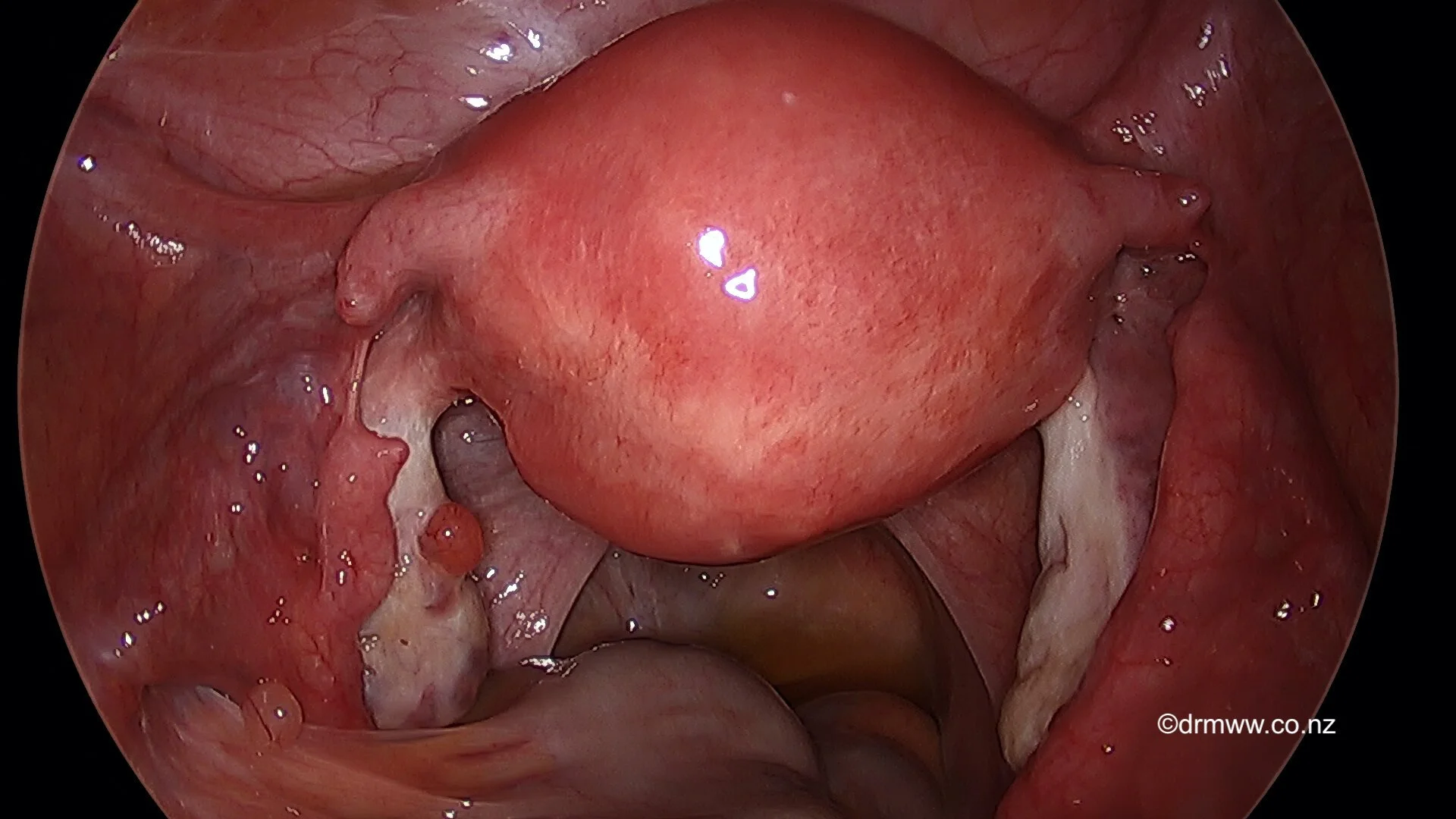
Laparoscopic view of previous tubal ligation (divided Fallopian Tubes)
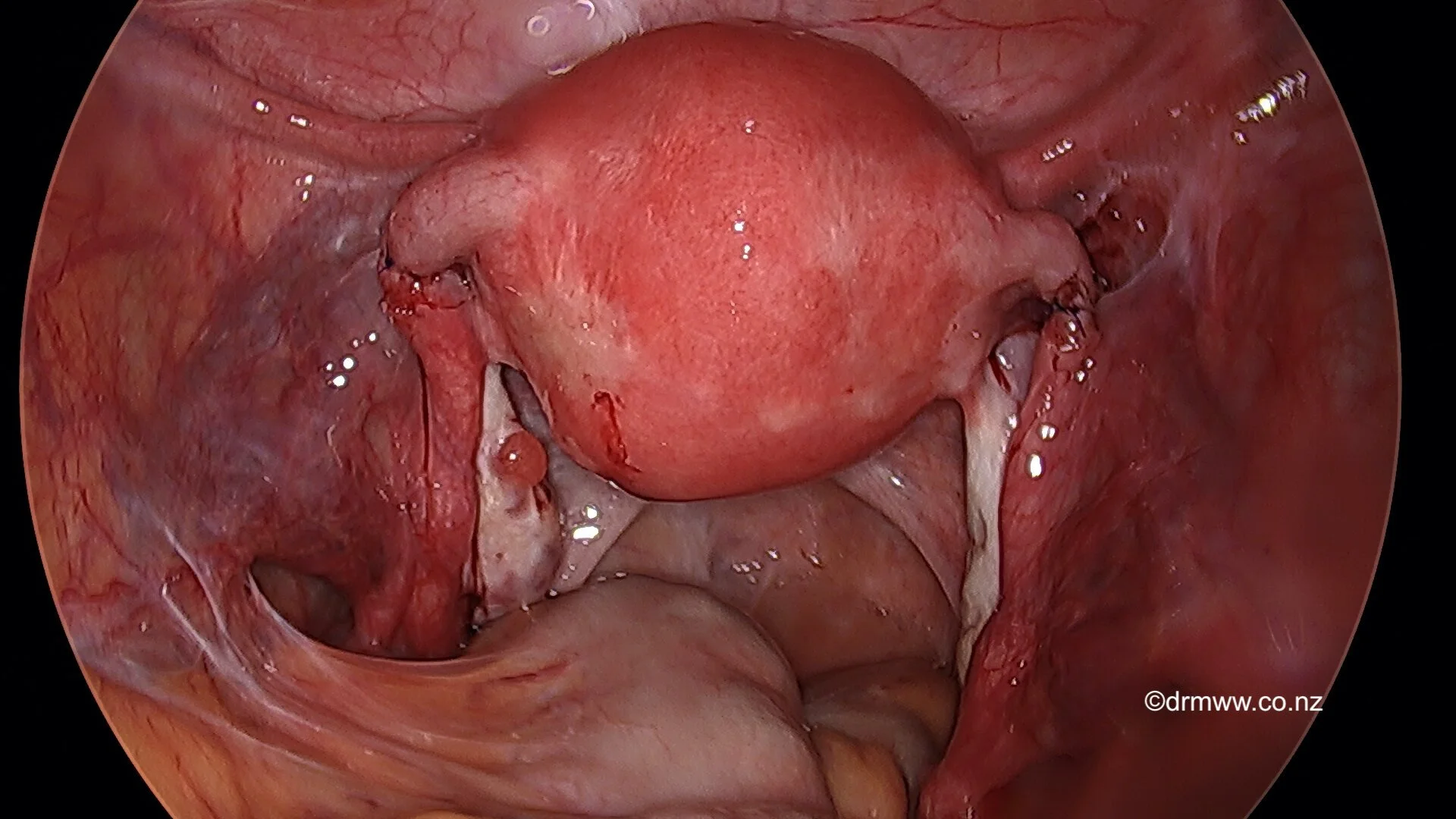
The Fallopian Tubes are rejoined after the laparoscopic repair
The chance of achieving a pregnancy after a reversal is reported in the literature as about 80% or four out of five. Success has been shown to depend on your age, the condition of the tubes, and the experience of the surgeon. Dr Wynn-Williams has been performing tubal reversal surgery for over 15 years. The risk of miscarriage is significantly increased in your late 30s and early 40s. The risk of ectopic (tubal) pregnancy after a reversal procedure is reported at around one in five cases (20%). Some women may not be suitable for the procedure, as most or all of the tubes may have been removed in the sterilisation procedure. Obtaining a copy of the operation report from the initial sterilisation procedure will help Dr Wynn-Williams work out the best approach for you.

Dr Michael Wynn-Williams
MBChB (Otago), FRANZCOG
Gynaecologist, Advanced Laparoscopic Surgeon, Endometriosis and Pelvic Pain Specialist
Dr Michael Wynn-Williams is a highly experienced Auckland gynaecologist and AGES level 6 laparoscopic surgeon, specialising in the treatment of endometriosis, fibroids, pelvic pain, and ovarian cysts. With a commitment to minimally invasive surgery, advanced endometriosis ultrasound and evidence-based practice, he helps women across New Zealand achieve better outcomes with empathy, precision, and respect